Crafted for performance and dependability, the circulating heated water bath provides dependable temperature control with an intuitive interface. It has a rugged outer casing and stainless steel inner tank to withstand corrosion and contamination. The circulating heated water bath offers rapid heat-up and uniform temperatures across the chamber, minimizing the possibility of sample destruction. Its display screens allow for real-time monitoring, facilitating precise adjustment during the experiment. Low noise operation with advanced thermal sensors, the circulating heated water bath guarantees stability and reliability during prolonged laboratory use.

Employed extensively in life sciences, environmental testing, and industrial R&D work, the circulating heated water bath promotes even heat for sensitive operations. Employed to enable laboratory operations that include heating reagents, culture incubation, and biochemical reaction maintenance, the circulating heated water bath is applied in environmental studies for sample conditioning and temperature-related analysis. With a stable thermal response, it minimizes experiment-to-experiment variability. From applications in work done for instruction to research-level work, the circulating heated water bath provides a dependable heat environment that enhances the integrity of lab investigations.
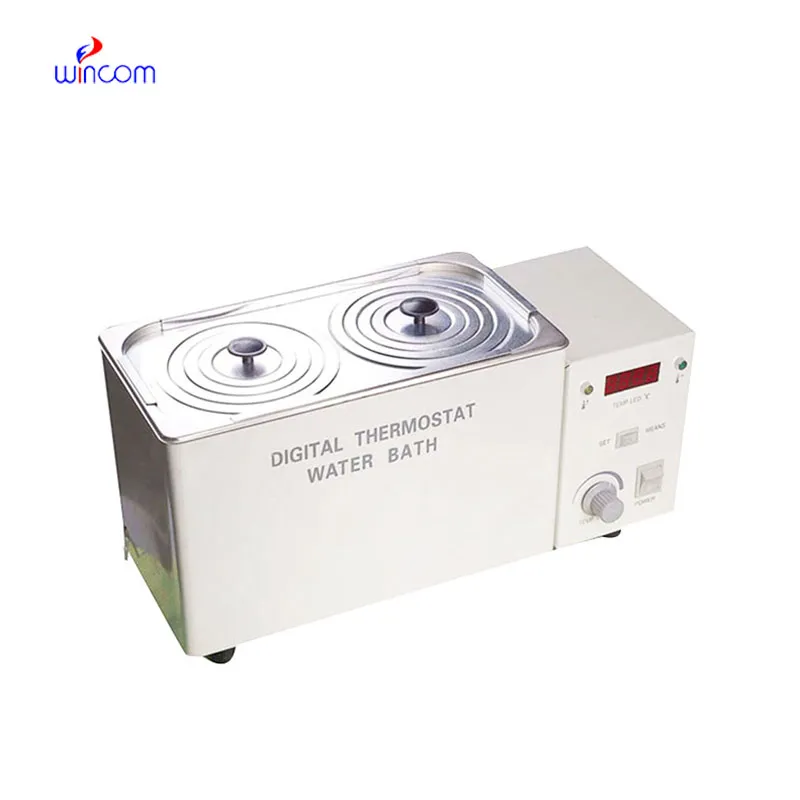
The circulating heated water bath of the future will bridge advanced engineering and digital intelligence. Machine learning will adapt and learn to experimental requirements, and real-time temperature mapping ensures precision with each sample. Future systems will have autonomous calibration and enhanced data-monitoring capability for increased reproducibility. The circulating heated water bath will drift towards greener design principles with less energy consumption and recyclable materials. The innovations will optimize the laboratory for efficiency and transform the management of temperature control in scientific research.

Maintenance of circulating heated water bath involves periodic cleaning and inspection cycles. Unplug the device and let it cool down completely. Clean the interior using non-abrasive cleaning materials to prevent scratching. Use deionized water to limit mineral deposition and maximize heating efficiency. Check for rust or deposition on metal components. Ensure the temperature sensor is covered up to the hilt in use. Regular maintenance prevents the circulating heated water bath from delivering optimal performance and shortening the lifespan of its heater elements.
The circulating heated water bath is a must-have equipment in modern labs for being able to provide consistent temperature conditions. It simply heats water to a certain degree, allowing samples to be kept at consistent warmth when incubating or analyzing them. The circulating heated water bath can minimize temperature fluctuations that could affect experimental results. The majority of the models incorporate digital controllers and safety alarms that assist in preventing overheating. Its simplicity in design renders the circulating heated water bath universally usable in a wide range of laboratory applications.
Q: What makes a water bath important for laboratory precision? A: Its ability to maintain constant, uniform temperature conditions ensures reproducibility and accuracy in experimental results. Q: Can deionized water be used instead of distilled water? A: Yes, deionized water is also suitable, as it minimizes mineral deposits and supports cleaner operation. Q: How should a water bath be stored when not in use? A: Drain the tank completely, wipe it dry, and keep it covered in a clean, dust-free area to prevent corrosion and contamination. Q: What are common signs that a water bath requires maintenance? A: Slow heating, fluctuating temperatures, or visible residue in the tank indicate that cleaning or inspection is needed. Q: How can user safety be improved when using a water bath? A: Always use insulated gloves, avoid contact with hot water, and ensure the equipment is placed on a stable, dry surface during operation.
The hospital bed is well-designed and very practical. Patients find it comfortable, and nurses appreciate how simple it is to operate.
The delivery bed is well-designed and reliable. Our staff finds it simple to operate, and patients feel comfortable using it.
To protect the privacy of our buyers, only public service email domains like Gmail, Yahoo, and MSN will be displayed. Additionally, only a limited portion of the inquiry content will be shown.
We’re looking for a reliable centrifuge for clinical testing. Can you share the technical specific...
We are planning to upgrade our imaging department and would like more information on your mri machin...
E-mail: [email protected]
Tel: +86-731-84176622
+86-731-84136655
Address: Rm.1507,Xinsancheng Plaza. No.58, Renmin Road(E),Changsha,Hunan,China


 EN
EN
 af
af
 es
es
 ar
ar
 tr
tr
 sw
sw
 pt
pt
 th
th
 ur
ur
 bn
bn
 ne
ne
 vi
vi
 km
km
 lo
lo
 de
de
 ru
ru
 fi
fi
 nl
nl
 fa
fa
 fr
fr
 ko
ko