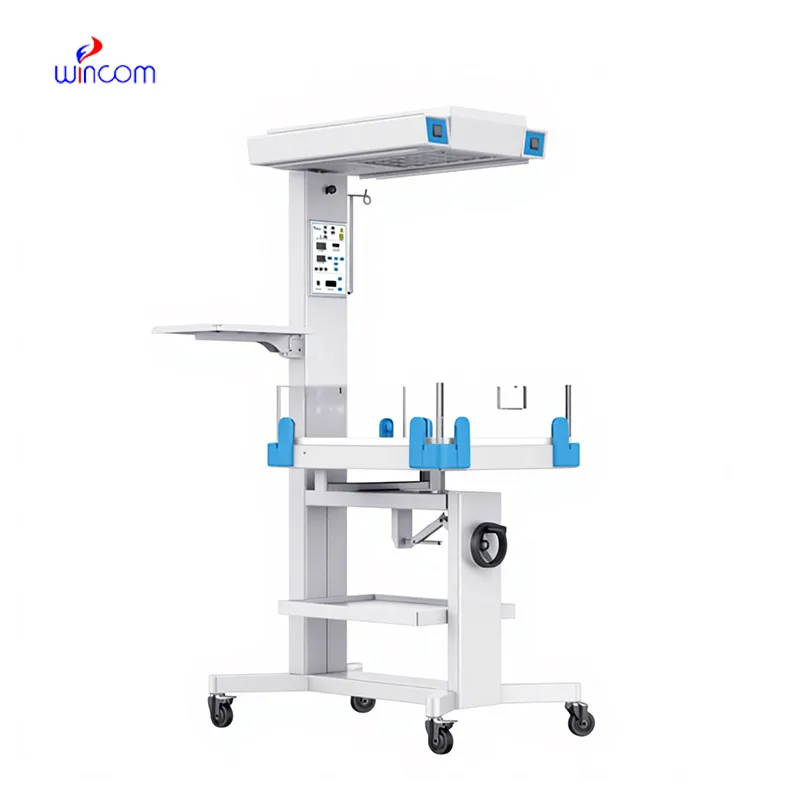
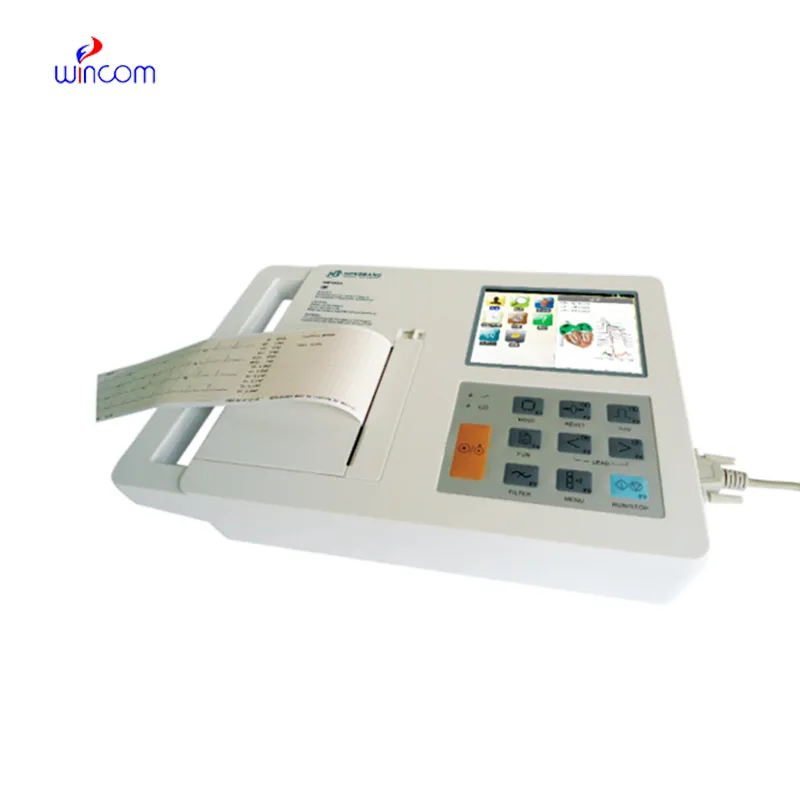
patient care monitoring is developed to guarantee accurate physiological monitoring in hospital settings. By combining ECG tracking with vital sign measurement, it gives a complete picture of patient health. The machine is constructed to be easy to read and stable, thereby making it possible for clinical interpretation to receive data consistently. Its function is not only limited to inpatient wards but also to recovery areas and diagnostic units.

Inpatient situations in common hospital departments, patient care monitoring serves the purpose of prolonged patient observation for the duration of the stay. Long-term hospitalization is accompanied by the monitoring of Continuous ECG which aids in the identification of rhythm abnormalities. This application makes the manual checks less and at the same time, it increases the efficiency of the monitoring system. Their use facilitates the maintenance of stable patients throughout the different shifts of their care.
With the evolution of clinical education, patient care monitoring will be a strong support to the advanced training environments. The hospitals that teach may have future systems with various simulation modes and interactive ECG visualization. This trend will not only raise the standards of medical training but also improve the interpretation skills of the healthcare workers.

Keeping patient care monitoring in good condition depends on watching the sensors and electrodes. The leads will then have to be tested for good conductivity and also for secure connections, the reason being that ECG signal capture has to be stable. Environmental control measures taken, like making temperature stable and lessening vibration, safeguard the accuracy of the measurements. The staff will have to keep documenting the maintenance activities done and inspection results so as to meet the hospital protocols. These practices will make it possible for patient care monitoring to give accurate physiological monitoring during routine and high-intensity clinical operations.
In hospital patient care areas and emergency rooms, patient care monitoring is a common practice for quick patient evaluation. Constant ECG monitoring enables medical personnel to see variations in heart rhythm simultaneously. Such a feature is vital in critical care, post-surgery monitoring, and everyday patient observation. The use of patient care monitoring in hospital processes increases medical awareness and facilitates prompt decision-making in all nursing care areas.
Q: How often should ECG electrodes be replaced? A: Signal detection accuracy depends on the regular replacement of electrodes. Q: Can a Patient Monitor & ECG be used in neonatal care? A: Certainly, the use of specialized sensors allows safe monitoring of newborns and infants. Q: Does a Patient Monitor & ECG provide alarm functions? A: Alarms are indeed present, with notifications sent to the staff in case of abnormal heart rates or any other vital sign changes. Q: Can it record trends over time? A: It can indeed show historical data for patient analysis and clinical evaluation. Q: Is maintenance required for a Patient Monitor & ECG? A: Long-term performance and accuracy depend on regular maintenance and cleaning which are appropriate for the equipment.
The microscope delivers incredibly sharp images and precise focusing. It’s perfect for both professional lab work and educational use.
The water bath performs consistently and maintains a stable temperature even during long experiments. It’s reliable and easy to operate.
To protect the privacy of our buyers, only public service email domains like Gmail, Yahoo, and MSN will be displayed. Additionally, only a limited portion of the inquiry content will be shown.
We’re currently sourcing an ultrasound scanner for hospital use. Please send product specification...
Hello, I’m interested in your water bath for laboratory applications. Can you confirm the temperat...
E-mail: [email protected]
Tel: +86-731-84176622
+86-731-84136655
Address: Rm.1507,Xinsancheng Plaza. No.58, Renmin Road(E),Changsha,Hunan,China


 EN
 af
 es
 ar
 tr
 sw
 pt
 th
 ur
 bn
 ne
 vi
 km
 lo
 de
 ru
 fi
 nl
 fa
 fr
 ko